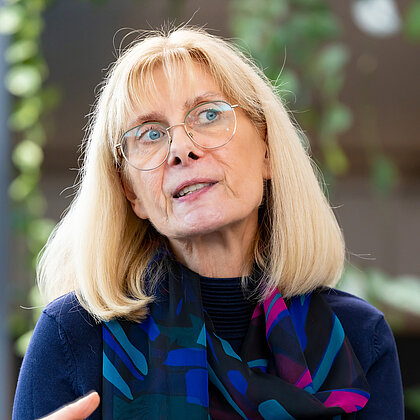
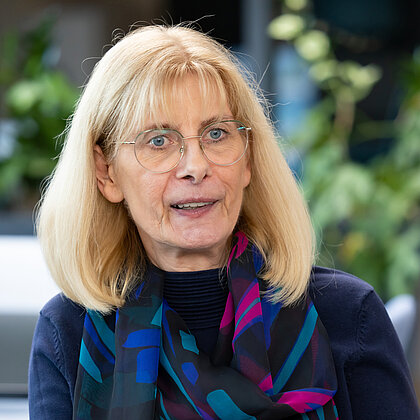
Eva Otter has been living with pulmonary arterial hypertension for twenty years. Many people know Ms. Otter as the trusted “face” of this disease, as she has been working tirelessly on behalf of patients for years through the nonprofit organizations PH Austria and PHA Europe. Pulmonary arterial hypertension is a rare disease that can affect anyone at any age and for which there is currently no cure. We had the opportunity to speak with Eva Otter about her personal experiences and her hopes for the future.
Living with Pulmonary Arterial Hypertension
My name is Eva
“I was diagnosed with pulmonary arterial hypertension in 2003. At the time, I was a busy medical laboratory director in Lower Austria and also assisted my boss with conferences, publications, and so on. After feeling unwell for some time and not getting any better—even though I was following my doctors’ advice—such as exercising more, losing weight, working less, and changing my lifestyle—I simply didn’t have the time or energy to look into my condition any further. Finally, my doctor told me that it would be “too late” if I delayed the diagnostic tests any longer. That came as a shock to me, so I took action to find out what was wrong with me and get a medical diagnosis.”
What was it like when you were diagnosed with pulmonary arterial hypertension?
“I felt like the ground had been pulled out from under me. In that moment, you no longer know what your life will look like, and you lose your self-confidence. What saved me was that I quickly got in touch with the right doctors and our support group. That helped me gain access to home care, psychosocial support, and, above all, other patients.”
Eva Otter
We know that we can achieve the best possible quality of life when we take charge of our own health. After all, we know our own bodies better than anyone else.
Photo credit: Ludwig Schedl, APA OTS
For me, the most important message is: Never give up! Even with PAH, you are the same person you were before you got sick.
The past few years have made it clear to all of us that, while the world has changed, we can weather even the most difficult times if we work together.
How do your symptoms affect your quality of life?
"I often feel dizzy and have a tightness in my chest. I’m exhausted and my muscles ache. And above all, I’m short of breath. It’s hard for me to breathe. There are days when I don’t feel so well, and then I can’t go outside anymore. It’s no longer possible to climb a hill or even a flight of stairs. It’s been a frightening but also wonderful journey to rediscover joy and peace with my situation. This required a holistic approach.”
How did you get your fears under control?
“When I was diagnosed, I couldn’t imagine what that would mean for my life or what would happen. One of the hardest things for me was no longer being able to work. But the biggest challenge for me is admitting to myself that I’m sick and can no longer do everything I used to do. It helps a lot to meet with like-minded people to better cope with the illness, as we do in our support group. Taking care of your mental health and seeking help from a psychologist shouldn’t be taboo.”
How do you live with the illness?
“How people perceive the illness varies from patient to patient. Sometimes you can see the despair in patients’ eyes. For me, it’s important that I don’t need help from others for as long as possible. And it’s very important for all of us to stay informed about new, innovative treatment methods.
Another aspect is the fight against isolation. My family is always there when I need help; they understand my situation. For me, the most important message is: Never give up! With PAH, you’re the same person you were before your illness. You’re still “YOU.”
How can someone diagnosed with PAH find quality of life?
“I’ve learned that taking control of our own health gives us the best possible chance to improve our quality of life. After all, we know our own bodies better than anyone else. To achieve this, we need support and reliable tools for managing the disease.
I believe the best way to do this is to join a support group. In my case, that’s PH Austria. I know that without medical treatment and PH Austria, I wouldn’t be able to live the way I do today, and that’s why I’m so motivated to encourage others to join a support group and help them gain access to high-quality medical care.”

How has your quality of life changed for you?
“The PAH diagnosis marked the beginning of a journey that led me to accept my illness and find a ray of hope in my life, which has taken a completely different direction than the one I had planned. Step by step, I’ve learned to cope with this disease and lead a different, fulfilling life by helping other patients. I finally feel free again to set new goals for myself: I’d love to see a Lady Gaga concert with my grandson—I’m really looking forward to that.”
What goals, aside from your personal ones, do you want to pursue within PHA Europe?
As the current president of PHA Europe, I am in a position to make a difference for PAH patients; advance funding for medical treatment and devices in underrepresented parts of Europe, improve access to home care and psychosocial support, and create an integrated care model for PAH patients.
For more information on pulmonary arterial hypertension:
https://www.phev.de/
https://www.phaeurope.org/